
Direct Neurofeedback

Calms the Brain

Resets the Nervous System

Direct Neurofeedback is Drug free – Painless – Non-invasive – Effortless.

No Wait List, Book Now, In Person Sessions 

9:00 am – 8:00 pm Monday to Friday, 9:00 am – 5:00 pm, Saturdays and 10:00am – 5:00pm Sundays.

Text or Call: 604-732-3930 …or… Email: info@alpinereply.ca

Counselling award
Counselling award 2023

Mental Health = Brain Care

“Why Can’t I Get Over My Anxiety and Depression?”

Because it’s NOT All in Your Mind.

It’s in Your Nervous System too.

Direct Neurofeedback function is to CALM your nervous system

To successfully treat Anxiety, Depression & PTSD you MUST attend to your physiology as well as your psychology.

Day to Day Stress

How we experience the events and people in our day-to-day life is based on how well our Nervous System can respond.

When we are either stuck in the fight or flight state and feel “ON” and hyper-vigilant, or stuck in the freeze state, where we feel shutdown and overwhelmed then we can’t properly process the stimuli around us.

“How Neurofeedback Works”   1:47

Direct Neurofeedback is a brain technology that Calms Your Brain and Resets Your Nervous System.

It does this by sending imperceptible micro-signals, that helps your brain get out of stuck and frozen patterns of thinking and reacting.

Results come very quickly.

The effect is like rebooting a frozen computer.

What Is Direct Neurofeedback – 7:33 mins.

Tamara Bell – TV Host going through 20 Neurofeedback Sessions – 3:50 mins.

Claire Maisonneuve, Director

Looking for someone you can Trust?

TESTIMONIAL: Family Physician, Dr. David Dyment MD, CCFP says,

“As a family physician in Burnaby B.C., I have been referring patients to Claire Maisonneuve for the past 27 years. The feedback I have received has been remarkable. She gets results and I would strongly recommend Ms Maisonneuve for anyone seeking couples or individual therapy.”

Over 35 years of helping clients make break-throughs in their lives. 

Vancouver’s Premier Counselling and Neurofeedback Clinic.

Frequently Asked Questions About Direct Neurofeedback

Your mental states are reflected in your brain’s electrical activity: what is known as your brain wave patterns.

Neuroscience has shown us that by changing our brain we can change our mind.

Anxiety, depression, dysfunctional thinking and trauma are associated with stuck patterns of either overactive, underactive or disturbed brain wave activity.

During a Direct Neurofeedback session, tiny sensors are applied to your scalp, behind your ears, and on the back of your neck. The sensors allow us to read the very delicate electrical activity of your brain, in the same way that an EKG reads your heart.

Very weak, imperceptible, electromagnetic signals, specific for you, are sent to your brain. These signals (that are 1000 times weaker than simply holding a AA battery against your forehead) cause a slight fluctuation in your brainwaves that disrupts frozen, stuck patterns of the brain, and allows your brain to re-organize itself and re-establish healthy neural pathways.

This brief signal to the brain, that cannot be felt, does all the work. Although signals are very weak they produce changes in brainwave activity by allowing the brain to relax and reorganize itself towards greater self-regulation with initial results as early as the first session.

With immediate results, fewer and shorter sessions, as well as ease and simplicity, Direct Neurofeedback is an easy choice with tremendous benefits!

The brain is like your body, it can be trained to be stronger, more efficient and have greater stamina. All of which makes you more resilient.

Direct Neurofeedback helps your brain in four major ways.

Research indicates that anxiety, trauma, depression and concussions are frequently associated with stuck patterns of overactive, underactive or disturbed brain wave activity, usually in the part of the brain associated with the ‘fight, flight or freeze’ response.

Direct Neurofeedback stimulates the brain to promote healing, and enhance overall performance in 4 ways.

  1. First through gently unblocking neuropathways that are ‘stuck’ or ‘frozen’ as a result of overwhelming traumas or fears.
  2. By reducing the activity in the ‘sympathetic’ part of the nervous system, associated with the ‘fight, flight or freeze’ response.
  3. By enhancing the response of the ‘parasympathetic’ system, responsible for the calming effect resulting in relaxation, which can then allow the mind/body to heal itself.
  4. And finally it increases overall normal brain functioning.

Although the conditions treated with Direct Neurofeedback may have very different causes, they all have the same common denominator: they are stuck in dysfunctional patterns. Direct Neurofeedback disrupts these patterns, regardless of their origin, and allows the brain to return to it’s previous optimal functioning and/or create new healthy pathways. This is supported by the recent findings in neuroscience on neuroplasticity.

Unlike traditional forms of Neurofeedback that would treat one specific area of the brain, Direct Neurofeedback aims to restore the overall functioning of the brain.

People with anxiety, depression or trauma tend to have either an over-active or under-active nervous system, which is often experienced as hyper vigilance (being on guard at all times), intrusive thoughts or memories, insomnia, abrupt mood swings, hyperactivity, difficulty concentrating, lack of energy and more.

This means that the ‘fight, flight or freeze’ response is overactive, creating hyper or hypo arousal of the nervous system. Some people talk about feeling always “ON”.

Direct Neurofeedback works directly on reducing the ‘fight, flight or freeze’ response, to allow the brain and body to relax and the nervous system to reset itself.

This improves resilience, increases calmness and restores the ability to better handle stress.

At the end of each session, you are likely to feel more relaxed, ‘lighter’, and yet energized.

After completing a full course of treatment these benefits become lasting and sessions are no longer needed.

AlthoughDirect Neurofeedback has been found to be effective in a wide application of symptoms we specialize in usingDirect Neurofeedback for:

  • Anxiety and panic attacks
  • Obsessive Compulsive Disorder
  • Depression
  • Bipolar disorder
  • PTSD (Post-Traumatic Stress Disorder)
  • Mood swings that seem hard to control
  • Difficulty concentrating
  • Low mental and emotional energy
  • Problems with procrastination
  • Insomnia and poor sleep
  • Attention Deficit Disorder (ADD and ADHD)
  • Traumatic Brain Injury (TBI) – Concussions
  • Tics
  • Mental fogginess and lack of clarity
  • Chronic pain
  • Fybromyalgia & Chronic Fatigue

Recent scientific advances in brain neuroplasticity has helped us understand more specifically the impact of trauma on the brain and also what kind of therapies and interventions work best to treat trauma.

Dr. Bessel Van Der Kolk, in his recent book “The Body Keeps the Score” outlines the importance of body centered therapies and the effectiveness of neurofeedback.

You can hear Dr. Van Der Kolk speak about the impact of trauma on the brain here:

https://www.youtube.com/watch?v=LKWUmwxi1ZI

YES! Children and teenagers respond more favorably and quickly to the treatment of Direct Neurofeedback.   Helping younger ones to restore proper functioning of their brain while the brain is still developing is most important.

The American Academy of Pediatrics supports Neurofeedback as a “Level 1 Best Support” intervention for the treatment of ADD/ADHD in children.

While everyone is different, it generally takes about 18- 20 sessions for effect of Direct Neurofeedback to become lasting. Clients frequently notice changes within the first session, often before getting out of the chair.  Sometimes this improvement is dramatic.  At first, improvement is temporary, lasting from a few hours to a few days. By the completion of the appropriate set of training sessions, improvement is expected not only to last, but to continue increasing slightly on its own over time.

Most people notice an initial change within 3 to 4 sessions, occasionally a little longer. The average number of sessions for most problems is 18 to 20. Once treatment has been completed, additional sessions are usually not necessary. Occasionally clients may like to get a “booster”.

Your first Direct Neurofeedback session is approximately one hour. During this time, the Director will review your intake form and discuss your symptoms. Follow-up sessions are 30 minutes in total, including time to apply and remove the electrodes.

It is recommended that people come twice a week for the first 10 to 12 sessions. Three times a week is also acceptable. After the initial 10 to 12 sessions it is usually suggested that we continue the treatment once a week.

Unlike traditional neurofeedback in which you actively regulate your brainwaves, Direct Neurofeedback does not require you to do anything. It is effortless. While the client sits in a chair, sensors are applied to the scalp by the clinician. The clinician determines what protocol would be best suited to the client. The computer then tracks the activity of your brain and based on the choice of the protocol, the computer program regulates what signals to feed back to your brain.

The sessions are completely painless and require no conscious effort on the part of the client. You may notice yourself become quite relaxed or even sleepy, and at the same time energized.

Family and friends often begin to notice shifts in your moods and/or behavior within the first 6 sessions.

There is not a single known reported case of someone being worse off for having used Direct Neurofeedback or any type of neurofeedback, and no lawsuit for adverse effects of neurofeedback.

Direct Neurofeedback is 100% non-invasive, drug free and is extremely safe. Neurofeedback has been used by practitioners for over 30 years.

There are also no published reports demonstrating permanent negative effects from Neurofeedback.

The Direct Neurofeedback system is implemented using FDA approved and registered EEG processor/amplifier (510 k) hardware. It utilizes Direct Neurofeedback protocols (software, hardware & procedural sequences).

People will often notice effects shortly after a session or a few hours later.

Most of the time people will feel: calmer, more clarity, more energy, a sense of well being and possible decrease in pain.

Temporary side effects are not uncommon and include: feeling tired, wired (as in giddy or anxious), lightheaded, a slight headache, or at times nausea. These are always temporary and are actually a positive sign the your brain is responding to treatment.

These side effects are usually mild and typically last from minutes to hours and are always temporary. There is no need to be alarmed.

You may notice a temporary change in sleep and more vivid dreams.

You may have a temporary flare-up of those symptoms that were bothering you initially.

All these experiences are always temporary, and are a good sign that healing is occurring at a deep level.

Medication does not diminish the effectiveness of Direct Neurofeedback treatment. There is no need to stop or reduce your medication. We advise that you avoid making changes in your medications before beginning Direct Neurofeedback treatment. And only make changes with the help of your medical doctor. Direct Neurofeedback is not a substitute for medication, however it may reduce your symptoms to the point where you don’t feel the need for them.

Often the choice is not an either or. Many of the people who come to try Direct Neurofeedback have not found enough improvement in traditional talk therapy and have felt stuck. This is likely because the brain is frozen in rigid patterns. Direct Neurofeedback offers an effective strategy to help the brain get out of frozen, repetitive and inflexible patterns.

However, most clients usually find that Direct Neurofeedback is a good adjunct to their counselling, especially if they are doing some form of ‘body centered therapy’, as many of the therapists practice at out clinic. ‘Body centered therapy’ incorporates awareness of the body and mindfulness skills in the treatment. The insights that arise out of therapy are better integrated and the tools and techniques offered are more easily implemented. Depending on affordability some people may choose to do Direct Neurofeedback and therapy concurrently, while others may do the Direct Neurofeedback for a while and then start or resume their counselling.

We find that a combination of good educational support, effective therapy along with Direct Neurofeedback provides an integrated, mind/mind/soul approach to life’s difficulties.

Neurofeedback has been used and studied since the late 60’s.   Direct Neurofeedback is a recent development in neurofeedback that provides more immediate results, in fewer and shorter sessions with a greater ease of treatment.

In traditional neurofeedback, the sensors placed on the scalp transmit brainwave activity to the computer, which the client and clinician can observe. Then the client works at trying to change his brainwaves by performing certain tasks, the results of which can be monitored in real time. This feedback provides the information to guide the client’s efforts at using his/her mind to train his/her brain.   There are no electromagnetic signals sent to the brain in traditional neurofeedback. This approach usually takes about 30 sessions or more and sessions last 45 min. to an hour. In Direct Neurofeedback, there is no effort on the part of the client. Rather than training your brain, the computer generated short pulses act directly on the brain as a way of restoring it’s functionality.Direct Neurofeedback sessions last half an hour or less.

RESEARCH

Clarity Direct Neurofeedback showed promising, measurable reductions in PTSD symptoms for the single young adult studied, supported by standardized measures and qualitative reports. Elucidating the Effects of Clarity Direct Neurofeedback on the Post-Traumatic Stress Disorder Symptoms of a Young Adult: A Case Study – ProQuest

LENS is a distinct neurofeedback method with a 30‑year developmental history that differs conceptually and operationally from traditional neurofeedback. It functions as a behavioral neurofeedback application but uses different principles and procedures. LENS typically achieves similar clinical outcomes to traditional neurofeedback while requiring substantially fewer treatment sessions.

The Low Energy Neurofeedback System (LENS): Theory, Background, and Introduction: Journal of Neurotherapy: Vol 10, No 2-3

Overall Efficacy of LENS: The LENS (Low Energy Neurofeedback System): A Clinical Outcomes Study on One Hundred Patients at Stone Mountain Center, New York: Journal of Neurotherapy: Vol 10, No 2-3

LENS for Anger: LENS Neurofeedback Treatment of Anger: Preliminary Reports: Journal of Neurotherapy: Vol 14 , No 2 – Get Access

LENS for Anosmia/TBI: Can LENS Neurofeedback Treat Anosmia Resulting from a Head Injury?: Journal of Neurotherapy: Vol 11, No 1

LENS for Animals: The LENS Neurofeedback with Animals: Journal of Neurotherapy: Vol 10, No 2-3

LENS for ADD/Autism/TBI: Effective Use of LENS Unit as an Adjunct to Cognitive Neuro-Developmental Training: Journal of Neurotherapy: Vol 10, No 2-3

LENS for TBI: QEEG Evaluation of the LENS Treatment of TBI: Journal of Neurotherapy: Vol 14 , No 2 – Get Access

LENS for FASD: Lens Neurofeedback Treatment with Fetal Alcohol Spectrum Disorder and Neglect: Journal of Neurotherapy: Vol 16 , No 1 – Get Access

LENS for Fibromyalgia: Neurotherapy of Fibromyalgia? | Request PDF

BOOKS

  • The Body Keeps the Score by Bessel Van Der Kolk
  • The Healing Power of Neurofeedback by Stephen Larsen
  • Neurofeedback in the Treatment of Developmental Trauma:Calming the Fear-Driven Brain by Sebern F. Fisher
  • Neurotherapy and Neurofeedback: Brain-Based Treatment for Psychological and Behavioral Problems by Theodore J. Chapin and Lori A. Russell-Chapin
  • A Symphony in The Brain by Jim Robbins
  • LENS: The Low Energy Neurofeedback System by Corydon Hammond
  • The Neurofeedback Book: An Introduction to Basic Concepts in Applied Psychophysiology by Michael H. Schwartz and Susan Schwartz
  • Biofeedback and Neurofeedback Applications in Sport Psychology by Heinz-Dieter Schmidt and Peter A. Hall
  • Neurofeedback 101: The Questions and Answers for the Curious by Steven R. Smith
  • The Art of Smart: Neurofeedback for High Performance by Michael D. Cohen
  • The Handbook of EEG Neurofeedback by Eugene H. Lee and Bryan K. Pineda

VIDEOS

One man’s journey with LENS: https://vimeo.com/196521262

PODCASTS

Short (9 mins) summary of LENS:

https://open.spotify.com/episode/5k0nm6PhKpBEdaM3mVcJcX?si=CtuqQgIrTpWjUSuUOrsiDQ

 Longer (29 mins) summary of LENS:

https://open.spotify.com/episode/7Ct2kOyCJFiDghcTCkeIme?si=DoSK7JpoQN2VxLvTzRQoag

What Does Direct Neurofeedback Do?

  • Calms Racing Thoughts.
  • Increases Social Comfort.
  • Boosts Self Confidence.
  • Improves Sleep.
  • Increases Energy.
  • Shifts Depression.
  • Eliminates Panic Attacks.
  • Overcomes Anxiety.
  • Lifts Brain Fog.

Why is Direct Neurofeedback so Effective?

“Direct Neurofeedback’s effectiveness in treating things like Anxiety, Depression, PTSD, ADHD, Panic Attacks, Sleep Difficulties, Fear and other emotional conditions – lies in the fact that each one of these conditions is a REACTION to stress – not the stress itself.

This repeated reaction over time causes certain brain patterns to become stuck, unique to each individual. The brain learns how to function more optimally and continues to improve itself.

It’s a spa for the mind. You’ll be more comfortable in social situations and take more risks.

“Direct Neurofeedback targets those stuck neural patterns and disrupts them using a painless micro-signal (300 times less than what a cellphone emits) allowing the brain to reset itself and create new pathways – effectively changing itself.” Claire Maisonneuve, Director Alpine Clinic.

Testimonial – Direct Neurofeedback

“I’ve been shy, quiet and self conscious about speaking up in groups as far back as I can remember. I always felt like I didn’t have anything to offer or important to say and would blush, and get sweaty in conversations.  Now I feel like I have ‘a life’.   I can go to parties and have a ball. I find myself really laughing out loud – which surprises me! Now I feel excitement rather than dread when I face the day.”  H.D. North Vancouver

Want to Find Out How Neurofeedback Works?

These books are available on Amazon.ca
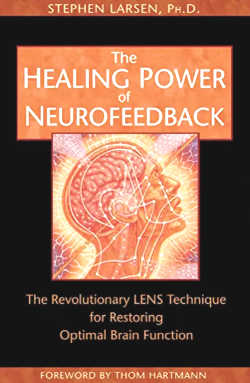
This book describes in easy to read detail the way Direct Neurofeedback works, and how it can help to restore optimal functioning of the brain after emotional or physical trauma.

Dr Bessel Van der Kolk is one of the world’s foremost experts on traumatic stress. He describes in detail in this book the use of Neurofeedback in helping with anxiety, depression and trauma.

Dr. Norman Doidge endorses the use of Direct Neurofeedback in his book “The Brain’s Way of Healing” in which he describes the process of neuroplastic healing and how it can work by applying non-invasive therapies like neurofeedback.

Dr. David Dubin MD on  Direct Neurofeedback.